


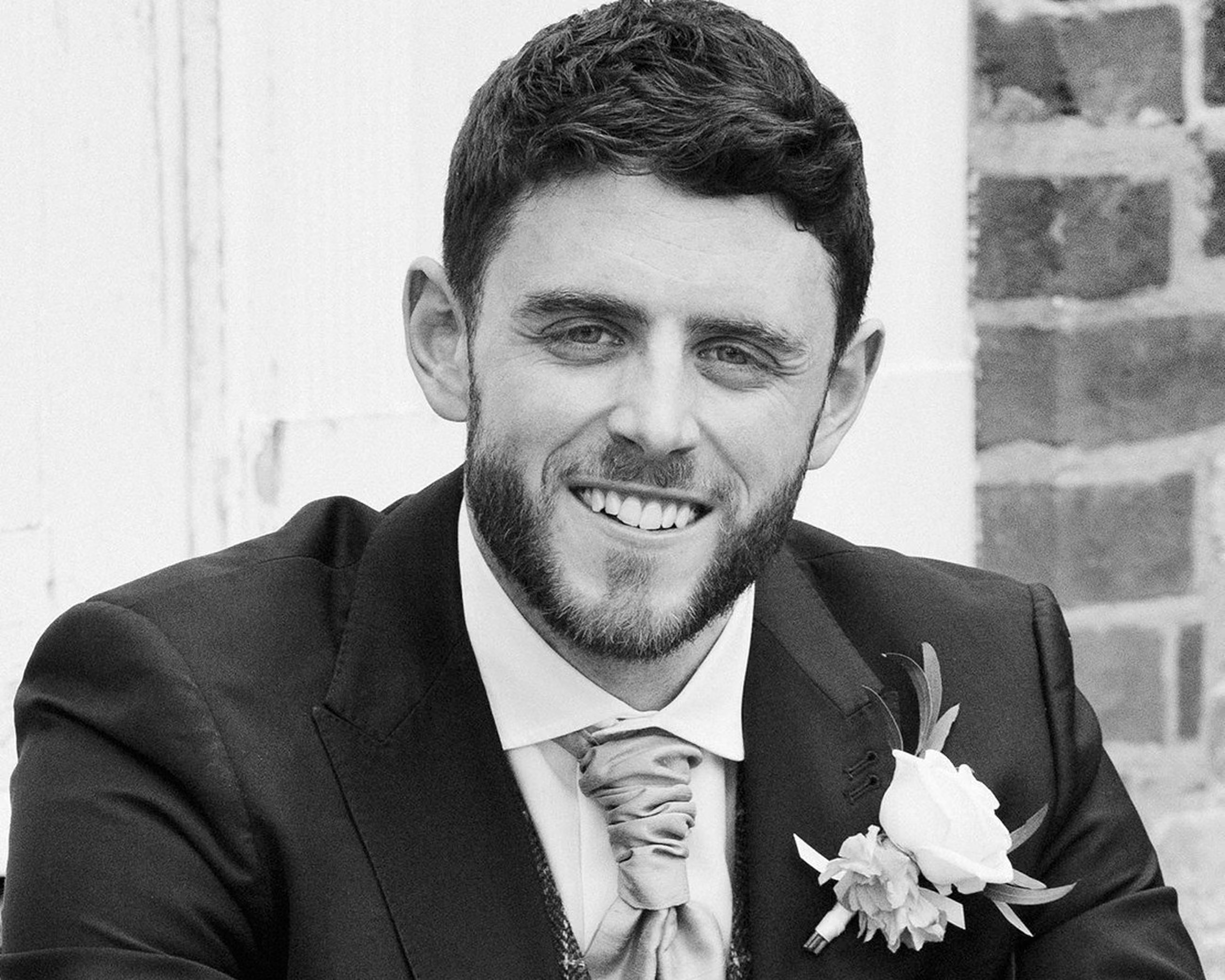
This month marked the seventh anniversary of the tragic death of PC Andrew Harper, who was killed in the line of duty in August 2019.
Seven years on, Andrew’s courage and sacrifice have not been forgotten. We continue to stand with his family, friends, colleagues and remain determined to ensure that those responsible for his death serve the sentences handed down by the courts.
As more than one million people unite behind that call for justice, we reflect on the extraordinary strength of a campaign that has brought the policing family and the public together.
Few issues have galvanised the policing community and the public quite like the campaign to stop the early release of PC Andrew Harper’s killers.
What began as a petition, launched on 4 August by Thames Valley Police Federation Chair Aileen O'Connor, has rapidly evolved into a national movement, attracting more than 1 million signatures and becoming one of the largest public campaigns in recent memory focused on justice, policing and public safety.
The extraordinary support reflects not only the enduring impact of Andrew's death but also a wider public belief that those who kill police officers should serve the full sentence handed down by the courts.
PC Andrew Harper was just 28 years old when he was killed while responding to the theft of a quad bike in Berkshire in August 2019. Caught in a tow strap attached to a fleeing vehicle, he was dragged along a country road while attempting to stop the offenders from escaping. The tragedy shocked the nation and led to a determined campaign by his widow, Lissie Harper, which ultimately resulted in the introduction of Harper's Law to strengthen sentences for those who kill emergency workers.
Anger and disbelief spread across policing and members of the public earlier this month when it emerged that two of the men convicted of Andrew's manslaughter remained eligible for early release under Government measures designed to ease prison overcrowding.
Lissie was quick to react furiously to the news and said: “This is an utter betrayal - and it's one I will not be able to forgive or forget. This is disgusting. I am beyond appalled and bristling with anger to hear that Andrew's killers are soon to be free to roam the streets.
“What abhorrent message does this send? How dare Ministers say the killing of a police officer is not enough of a “sickening crime” that deserves the stiffest of punishments.
“The level of disrespect the Government are showing to Andrew and other victims - and to their loved ones such as me - is beyond contempt.”
For many officers, families and members of the public, the prospect was unthinkable.
Within hours of the Government’s announcement, Aileen launched a Change.org petition calling on the Government to prevent the release of Andrew's killers before they had completed their sentences. The Police Federation of England and Wales immediately threw its support behind the campaign, encouraging members, branches, retired officers, police staff, friends and families to sign and share the petition.
“I am absolutely outraged that the Justice Secretary and the Prime Minister have decided that killing a police officer in the execution of their duty is somehow less serious than other offences deemed too dangerous for early release.
“Explain it to the officers who attended the scene on 15 August 2019 and witnessed the horrific consequences of that crime. The friends and colleagues that had to hear about it on the radio. Tell them that the life of a police officer does not warrant the same protection under this legislation.
“This decision pours salt into wounds that have never healed. It is an insult to Andrew's family, his friends, his colleagues and the entire policing family.
“Time and time again they have been forced to relive their grief while watching a justice system that they trusted fail to recognise the unique sacrifice made by those who serve and protect the public.”
The Police Federation of England and Wales threw its full support behind the campaign. PFEW spokesperson said, “The Government has recognised that some offenders are simply too dangerous to be considered for early release, yet those convicted of killing police officers have been left off that list. This is deeply disappointing and impossible to justify. The public will rightly question why those who kill police officers can still qualify for reduced time behind bars.
“Every day, police officers put their lives on the line to apprehend offenders, protect the public and ensure justice is served often while facing cancelled rest days and significant disruption to their personal lives.
“Allowing those who take an officer’s life to be released early in an effort to ease pressure on the prison system risks undermining public safety and confidence. It will cause further distress to bereaved families and sends entirely the wrong message about the value placed on those who protect our communities.
“The Government must urgently reconsider this decision.”
UNPRECEDENTED RESPONSE
The petition surpassed 100,000 signatures within hours, climbed beyond 500,000 in a matter of days and has now moved beyond 1 million signatures.
Importantly, this has not been a campaign confined to policing circles.
The overwhelming public response demonstrates that many people see the issue as one of fairness, justice and recognition for those who put themselves in danger to protect their communities. Every signature represents an individual who believes that the sacrifice made by Andrew, and by police officers across the country every day, must be properly recognised by the criminal justice system.
The campaign has also unified policing behind a common cause. Local police federations, staff associations, elected representatives and serving officers, including 50 policing and law enforcement leaders, from across England and Wales have voiced their support.
Throughout the campaign, both Thames Valley Police Federation and the PFEW have consistently highlighted the impact the issue is having on serving officers.
Across media interviews, member communications and public statements, a recurring theme has emerged: officers increasingly feel they are expected to bear the consequences when other parts of the criminal justice system come under pressure. Federation representatives have argued that allowing those responsible for killing a police officer to benefit from emergency early release measures risks undermining confidence among officers and their families that their sacrifices are valued.
Yet the campaign's greatest success may be the extent to which it has forced the issue onto the national political agenda.
GOVERNMENT’s STAND CHANGES
As public support grew, ministers came under mounting pressure to explain why offenders convicted of serious sexual offences could be excluded from early release schemes while those convicted of the manslaughter of a police officer remained eligible.
The Government subsequently announced amends to its plan to exempt certain serious offenders from early release arrangements. While ministers initially indicated there was no straightforward mechanism to prevent the release of Andrew's killers without affecting wider categories of offenders, recent developments suggest the issue remains under active consideration.
Reports indicate the Prime Minister has directed to urgently explore options to prevent the early release of the offenders, despite significant legal and operational challenges. Downing Street has publicly acknowledged the strength of feeling surrounding the case and the widespread public concern generated by the campaign.
That shift matters and signifies the strength of feelings behind the petition.
Only days earlier, many feared the case had been closed. Today, there remains cautious optimism that a solution can still be found. Speaking to the media, as the petition passed 900,000 signatures, Aileen O'Connor described herself as "optimistic" that Government would ultimately do the right thing, while emphasising that the campaign was about securing justice for Andrew and his family.
Whether ministers ultimately find a legal route to prevent the offenders' release remains to be seen.
What cannot be disputed is the scale of public support behind the campaign. In an era when public attention is often fleeting, nearly one million people have united behind a single cause. They have signed, shared, spoken out and demanded action.
For Andrew's family, that support serves as a reminder that he has not been forgotten.
For serving officers, it demonstrates that the public understands the risks they face every day.
And for Government, it delivers a message that grows louder with each signature: when a police officer is killed protecting the public, justice matters.
As the petition moves ever closer to one million signatures, the campaign is no longer simply about one tragic case. It has become a national statement about the value society places on those who wear the uniform and the expectation that those responsible for taking an officer's life should serve the full consequence of their crimes.
FIFTY CHIEFS, ONE MESSAGE
The campaign to prevent the early release of Andrew's killers reached a significant turning point when 50 chief constables, commissioners and senior law enforcement leaders from across the United Kingdom issued a joint open letter to the Prime Minister via the National Police Chiefs’ Council.
In a rare display of unity, policing leaders from forces across England, Wales, Scotland and Northern Ireland, alongside the Metropolitan Police, British Transport Police, Ministry of Defence Police and National Crime Agency, publicly backed calls for the Government to examine every lawful option to prevent the offenders' release.
The significance of the letter extended far beyond adding another voice to the debate. The chiefs' intervention elevated the issue from a policing campaign to a matter of national criminal justice policy.
Importantly, the letter broadened the argument. While reaffirming support for Andrew's family, the chiefs framed the issue as one affecting all victims of serious crime, questioning how much confidence bereaved families and the public can place in sentencing if release arrangements are later changed.
The letter also gave additional weight to growing political pressure on the Government. By publicly welcoming the Prime Minister's intervention while calling for stronger safeguards for victims, public protection and community safety, policing leaders helped reinforce the campaign's central message: that confidence in the justice system depends on meaningful sentences for the most serious offences.
For campaigners, police officers and members of the public, the support of 50 policing leaders represented more than solidarity. It demonstrated that concern about Andrew Harper's case is shared at every level of British policing and strengthened calls for the Government to act before any release takes place.