


Racial Abuse Against Officers Rising In Thames Valley
30 June 2026
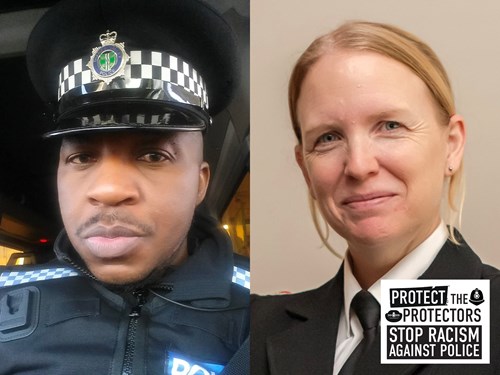
Racial abuse against Thames Valley Police officers and staff is rising, a senior officer in the force has said, adding that exact figures needed to be collected so more could be done to get justice for victims.
Chief Superintendent Emma Baillie, the Area Commander for Milton Keynes, was speaking after Thames Valley Police Federation backed the ‘Protect The Protectors: Stop Racism Against Police’ campaign.
As part of the force’s seven-point plan in supporting police victims, Ch Supt Baillie and her senior managers check in with every officer who is assaulted or is a victim of hate crime and makes sure the investigation and suspect is being dealt with properly.
She said: “It doesn't take an analyst to see that the amount of officers that I'm getting emailed about for hate crime – particularly faith and race-based crime – has gone up considerably in the past two years, while the world itself has been becoming more and more divided.
“It gets to a point where it feels inauthentic and inadequate to constantly speak to people and reassure them that we are there to support them. So my deputy, Detective Superintendent Andy Alexander and I started to have one-to-one meetings with some officers whose names were cropping up quite a bit. It was quite stark that some of them felt like they were the only person in the organisation this was happening to. Because people aren't talking about this.”
When Ch Supt Baillie saw the scale of the problem, her team looked up every officer from the local command unit who'd been a victim of hate crime in the past 12 months. She wrote to them, and asked if they would like to join a new support group, run by Insp Burrey (Buzz) Muzuva.
The Hate crime support group allows people to share their experiences, and collects ideas for what more can be done to support officers and staff and make sure investigations are carried out properly.
Insp Muzuva said: “I've always been passionate about supporting ethnic minority officers. When I was a young PC I used to face abuse myself, but not at the scale I am seeing now. I know how it feels to be a victim of hate crime.
“The community in the UK has changed, it's more diverse, and we are trying to attract diverse officers into the job. These officers bring different skills in different ways. But if we are not serious about tackling this, we are going to lose ethnic minority officers from the job.
“The Chief Superintendent and Deputy here have been brilliant in supporting the group. We need to give people a platform where they can express how they feel, and even discuss possible solutions, which we can take to the Chief Superintendent and the force.”
The group meets regularly via Teams Chat, and Insp Muzuva also has one-to-ones with officers who need further support. He added that, sadly, some ethnic minority officers were so used to being racially abused that they thought it was part of the job. He said: “It’s not part of the job – the job on its own is difficult enough without being abused. We want to make sure that, when these officers are racially abused, their cases are investigated properly and we get justice for them.
“From the people I've spoken to, sometimes cases don't get progressed. Sometimes the officer is waiting for a decision for five months. In that five months they may have been again racially abused another few times, then they just end up thinking, ‘Where do we start?’.”
Insp Muzuva said it was important that forces collect exact figures of race crimes against officers. He continued: “We also need to understand, if a person has been racially abused a number of times, how many positive outcomes did we get? Then we can review it and see why a person was not charged. Is it because of lack of evidence? Because for most hate crime offences, there will be bodyworn video, there will be witness statements, so we should be expecting positive charges. It would give us a way to analyse where we are failing our colleagues.”
Ch Supt Bailie added: “If policing doesn't stand up and be robust and take action where we can, then how on Earth can we expect society to hold the line on a level of behaviour either? So our plan is to try and track that criminal justice journey a lot better and support people along the way.
“We talk a lot about external trust and confidence. We police by consent; we have to have the trust and confidence of all of our communities if we're going to make policing work. But we have to get it right internally as well. I can't change society, but I can try to change the experience that people have of Thames Valley Police as their employer.”


© Copyright 2020 Police Federation All rights reserved