


Support for ‘Protect The Protectors: Stop Racism Against Police’ grows
3 December 2025
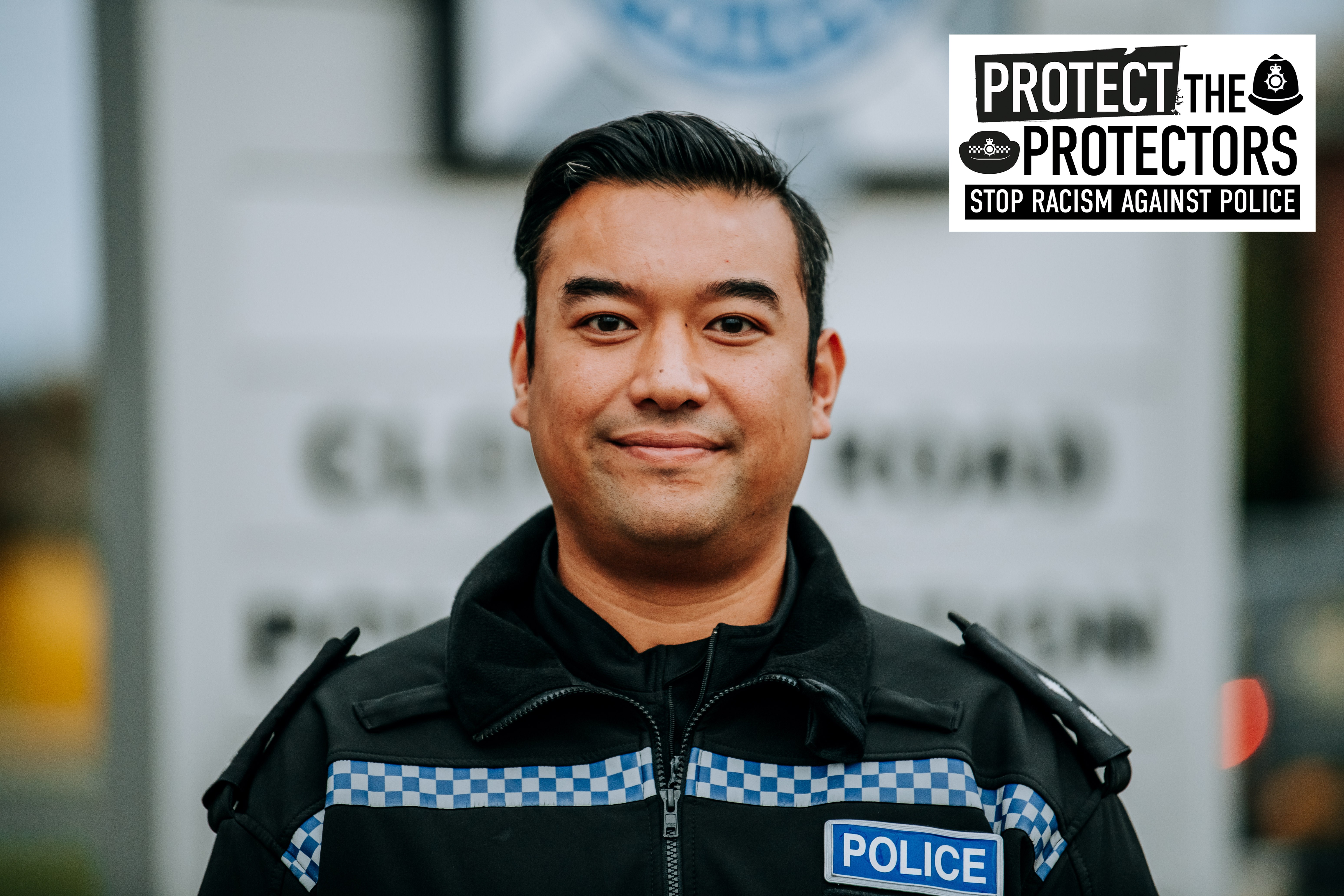
Chief Inspector Derek Hussain, Chair of Humberside Police’s Bridge staff association for ethnic minority officers and staff, is supporting the Federation’s campaign to ‘Protect The Protectors: Stop Racism Against Police’.
Derek has been a victim of hate crime himself, both within the police and outside of work, and said that there needed to be more support for victims to report incidents, as well as a change of culture.
He said: “I believe this campaign is incredibly important. As someone who has personally experienced hate crime, I know how isolating it can feel. When I first started in my role, I didn’t always have the confidence to report incidents. I worried about being seen as a victim and didn’t want to create extra work for my colleagues. I also felt embarrassed when I was in uniform and subjected to those comments. This highlights a significant social challenges.
“Sixteen years on, we are still seeing officers subjected to racial abuse. Our force has a zero-tolerance approach to hate crime against officers and staff. I believe that if we don’t stand up for our workforce, what message does that send to the community?
"Having the commitment of the Federation, our Chief Constable, and our staff association reassures colleagues that reporting is the right thing to do, we want to encourage all officers and staff to report hate crime. It is unacceptable, and we will take robust action against offenders.”
When Derek joined Humberside Police seven years ago, he was elected Chair of the Asian Police Staff Association. Recognising the value of unity, he reached out to other staff associations, including the Black Police Staff Association, and proposed merging.
He explained: "We came together and created Bridge. This enable anyone from a different such as the Polish or Egyptian community—can join our staff association if they wish.’ Bridge provides cultural, language, and religious support across the force and played a key role during last summer’s disorder.
“We worked closely with senior leaders and the Federation to check in on our people. Policing is highly effective at managing disorder and protest, but these events can have a real impact on those who work for us. For example, during the recent disorder, my parents avoided going to their local supermarket because they feared becoming victims of hate crime. There are colleagues within our workforce who feel the same way.
“In a team of 60 officers, there may only be one or two colleagues from an ethnic minority background. My members often tell me: ‘I’m already different, and I don’t want to make that difference even more visible at work. If I report it, I’ll have to go to court.’ It can feel overwhelming because, even when the outcome at court is positive, they have to relive the entire incident—and that can be deeply traumatising.
“That’s why the Federation campaign is so important—internal support is key. When an officer suffers a physical injury, it’s easy to respond. But when it comes to emotional trauma, we often struggle to find the right words. The real challenge is changing the culture.
“There’s still a lot to do, but at least we’re having honest conversations—from the Chief Constable to the Deputy Chief Constable and across all divisional commanders. I don’t think we’ll solve this quickly, but we are demonstrating real commitment.”


© Copyright 2020 Police Federation All rights reserved