


National Federation Gives Backing to STEP
24 November 2025
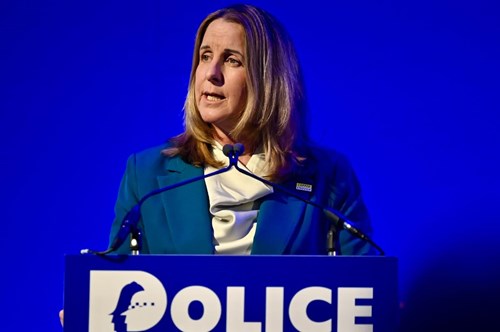
"There is no excuse for any force not to bring in the #STEP programme."
Police forces need to record figures of suicides and attempted suicides and if they won’t, the law needs to change to make them.
That was the message from Tiff Lynch, Chair of the National Police Federation of England and Wales, as she delivered a Key Note Speech to the Federation Conference this week.
Tiff began sent a firm message about the unacceptably high numbers of police officers and staff dying by suicide, often when they are in the isolated position of being under investigation.
Working towards suicide prevention was vital, she said.
“There is no excuse for any force not to bring in the STEP (Suicide Trauma Education Prevention) programme. Especially when so many of the tools are free or easy to adopt. It should not take an officer dying by suicide to make change happen.”
Forces need to acknowledge the link between the police misconduct regime and suicide, and break that link by carrying out risk assessments, making proper welfare checks and treating people with dignity.
Tiff added: “We’re not waiting for the law to change or for someone to grow a conscience: we’re pushing politicians to change it. Following a series of meetings with Lords, our amendment to the Policing and Crime Bill, making it the law to report suicide and attempted suicide, has been tabled by Lord Bailey of Paddington. It is supported by peers from all parties and will be debated in Parliament early in the new year.”
Tiff, who has been PFEW Chair for nearly six months, said the National Federation will push for better protection for police officers from assaults, and continue the Copped Enough campaign, which calls for “pay restoration, the industrial rights we deserve and dignity and fairness in modern workplaces”.
But Tiff said the Federation needed to go even further to influence change.
She said: “We want to restore policing as a career that gives the people brave, skilled and responsible enough to do it a good life. We want to lead a new workplace culture that is positive, inclusive and supportive of being a good family member as well as a good copper.
“We’ve got to fix the day job. That means proper staffing, realistic workloads, and leadership that asks ‘What are you facing?’ instead of ‘How are you feeling?’. And then does something about it.”
She said that officers on the frontline and in the Federation should be drivers of change, because they know the reality of policing: getting assaulted, having to grade images of child sexual abuse, dealing with botched IT rollouts.
She continued: “If police reform is consistent and listens to those officers, truly listens, there’s every reason to be hopeful. Because no one understands what needs fixing better than the people doing the job.”


© Copyright 2019 Police Federation All rights reserved