


PFEW Annual Conference 2026: day one puts officer welfare, fair pay and Federation reform in the spotlight
22 October 2026
New investment in officer wellbeing, demands for fairer pay and working conditions, and a renewed commitment to organisational change dominated the opening day of the Police Federation of England and Wales (PFEW) Annual Conference 2026.
Held under the theme ‘The Real State of Policing’, the two-day conference opened on Wednesday 21 October, bringing together Federation representatives, national leaders and delegates to examine the challenges facing policing and the action needed to better support officers.
From a multimillion-pound funding announcement to progress on reducing bureaucracy, Day One featured several significant developments.
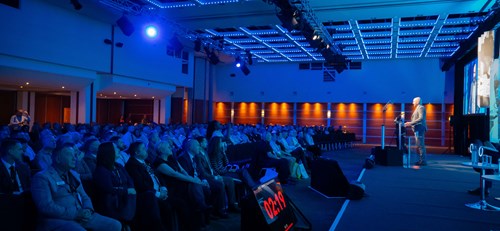
Picture credit: Anderson Photography
Government announces £2.4 million for officer wellbeing
Policing Minister Sarah Jones opened proceedings with a video address announcing £2.4 million in funding to improve mental health and trauma support for police officers.
The investment will help strengthen trauma services, extend psychological risk assessments and provide officers with confidential mental health assistance around the clock.
The Minister also confirmed that His Majesty's Inspectorate of Constabulary had been tasked with reviewing existing support arrangements and identifying opportunities for improvement.
The announcement followed an emotional opening speech from acting deputy national chair Paul Williams, who highlighted the pressures placed on officers by increasing workloads and stretched resources.
He spoke about the personal impact of policing, including exhaustion, the difficulties of maintaining family life and the demands of serving communities under challenging circumstances.
Delegates also took time to remember fallen colleagues during the conference's Roll of Honour.
Former firearms officer shares powerful experience
One of the day's most moving contributions came from Rebecca Kalam, a former West Midlands Police detective inspector and operational firearms commander.
Rebecca shared her experiences of challenging discrimination, harassment and victimisation within policing, describing the impact on her career, health and family.
Having pursued a formal complaint and employment tribunal proceedings, she said the force admitted liability on 75 allegations, but no officer had received a misconduct sanction.
Rebecca was medically retired in July 2023 following diagnoses of complex PTSD and generalised anxiety disorder.
Reflecting on her experiences of Federation representation, she highlighted the importance of consistent, compassionate support for members navigating difficult processes.
Her message to representatives was clear: see members, hear them and remain alongside them.
“You may have 20 cases. That member only has one, and it’s their whole world,” she told delegates.
Federation demands meaningful change on police pay
Acting national secretary Mel Warnes used her conference address to renew calls for substantial improvements to police pay, conditions and workplace protections.
She challenged the Government's response to recommendations from the Police Remuneration Review Body, which had described the treatment of the policing workforce as ‘exploitation’.
Mel criticised the failure to deliver the recommended above-inflation pay increase and reiterated the Federation's demand for collective bargaining and binding arbitration.
She argued that officers, who do not have the right to strike, must have access to a fair and effective system for determining pay and conditions.
Her speech also addressed maternity support leave, flexible working arrangements and the impact of prolonged misconduct investigations.
Preparing to retire after more than three decades in policing, Mel encouraged colleagues to maintain pressure for meaningful improvements.
New WAVES programme launched
The conference also marked the launch of WAVES, the Federation's Witness and Victim Engagement Support programme.
The initiative aims to provide confidential guidance and practical assistance to members affected by discrimination, harassment, misconduct, criminal behaviour or other unlawful treatment involving police personnel.
Support will be delivered through local Federation branches, working alongside a central coordination team.
National Board member Belinda Goodwin explained the programme's central purpose, saying: “WAVES puts the focus back on the person, not just the process.”
Disclosure campaign delivers results
Delegates also heard about important progress following the Federation's four-year #SimplifyDG6 campaign.
Ben Hudson, Suffolk Police Federation secretary and chair of the National Detectives' Forum, confirmed that revised national disclosure guidance, DG7, is expected to be published within weeks.
The campaign has focused on reducing unnecessary administrative demands associated with prosecution case preparation.
Early trials have demonstrated encouraging results, including 5,000 officer hours saved in Cheshire and an initial 37 per cent reduction in file-building time in Kent.
Ben emphasised that effective training and consistent implementation would be essential to securing the full benefits of the reforms.
Federation leaders outline transformation plans
The future direction of PFEW was examined during a panel discussion involving Paul Williams, Mel Warnes and interim chief executive officer Gabriel Miland.
Leaders acknowledged the damage caused by recent events involving national leadership and outlined proposals designed to rebuild confidence in the organisation.
A transformation programme informed by 49 independent review recommendations includes plans to establish a single general secretary role, reduce the size of the National Board and appoint independent non-executive directors.
The panel emphasised the need for stronger governance, greater transparency and a renewed focus on members.
Mel captured the determination behind the proposals, declaring: “This is a Federation that's worth fighting for.”
The PFEW Annual Conference continues today (Thursday 22 October), with further discussions expected on the challenges facing officers and the future of policing.
READ MORE: PFEW leaders pledge to build trust and deliver meaningful change.











© Copyright 2018 Police Federation All rights reserved