


Concerns over plans to merge police into 12 regional forces
18 December 2025
The proposals to create 12 regional super forces have been reported extensively in the media and could form part of a forthcoming policing white paper.
They are being presented as a way to make police forces more effective and consistent in fighting crime and deliver long-term financial savings. It would also see the pooling of specialist capabilities such as counterterrorism, organised crime, and cyber crime.
However, the Federation warned that such a model risks undermining effective local policing, particularly in large rural forces such as West Mercia.
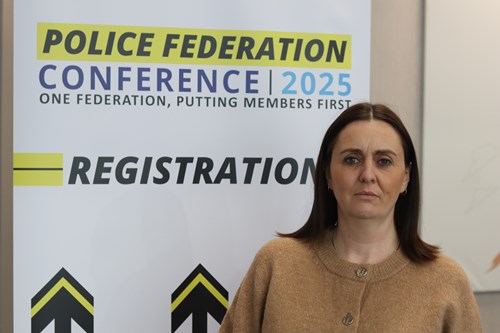
Branch secretary Lesley Williams
Secretary Lesley Williams said: “While a review of the current 43-force structure is welcomed, I can see our Force disappearing under this new model, and being swallowed up into larger forces such as West Midlands.
“West Mercia is already a large, efficient force that understands its communities.
“There is understandable concern that decisions may be taken further away, with rural and smaller communities impacted the most.”
West Mercia Police currently serves Herefordshire, Shropshire, and Worcestershire. It is one of the largest forces geographically in England, covering more than 2,800 square miles and serving around 1.3 million residents.
Policing model
The Force’s current policing model reflects a diverse mix of rural counties, market towns and medium-sized urban centres, with a strong emphasis on neighbourhood and rural policing.
Under a regional merger model, West Mercia Police could be absorbed into a larger force, most plausibly aligned with the West Midlands, Lesley said.
This could see strategic command functions, control rooms, and specialist units centralised outside the West Mercia area, with local policing boundaries no longer reflecting historic county boundaries.
West Mercia Police Federation is particularly concerned about the potential impact on rural policing.
There may be a risk local priorities could be diluted by region-wide demands, meaning issues such as farm theft, wildlife crime and anti-social behaviour are competing against urban pressures.
“The loss of critical local knowledge built up by neighbourhood officers over many years is another concern,” Lesley said.
Centralisation
She warned centralisation could also affect response times and accessibility, with dispatch decisions potentially being made further from rural communities and fewer local police stations or enquiry desks in villages and market towns.
“For many of our communities, policing is built on personal relationships with named local officers,” Lesley said. “That is something that could be eroded, damaging public confidence.
“These proposals are being presented as a way to improve access to specialist teams, better capability to tackle serious and organised crime across force boundaries, and more consistent systems.
“The Federation welcomes this as policing improvements as a whole.
“However, these must not come at the expense of local policing and visibility.”
The branch will be asking for clear answers to key questions. These include how rural policing would be protected within a regional force, what guarantees would exist around neighbourhood officer numbers and visibility, whether county identities and accountability structures would remain, and what the true transitional costs and disruption would be.
Lesley said: “We’ll continue to monitor developments closely and engage with stakeholders including our members, the chief constable, the Police and Crime Commissioner, and our local authorities.”
READ MORE: Tax threshold freeze will force more officers out of policing.


