


‘Police Reform must put officers and communities first’
28 January 2026
Discussions around police reform must focus on supporting frontline officers and improving services to local communities, says branch vice chair Matt Paisley.
With national debate increasingly describing policing as ‘broken', Matt has warned that reform must not further undermine officers who are already working under intense pressure.
Instead, he has stressed that any changes must positively impact police officers as well as the public they serve.
His comments come after Shabana Mahmood announced a White Paper titled ‘From local to national: a new model for policing’, proposing a radical shake-up across England and Wales, including the merging of forces and a license to practise for all officers.
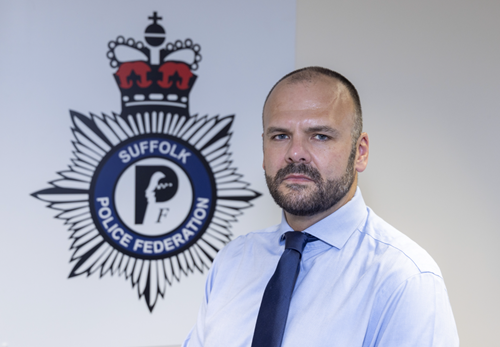
Branch vice chair Matt Paisley
The Government has called it the largest reform of the profession in two centuries, in a bid to strengthen neighbourhood policing, boost national capability against serious and complex crime, save money and streamline resources.
“I agree, policing as a system needs to be better,” said Matt, adding: “But that conversation must recognise the people delivering the service and give them the respect they deserve.”
One of the key proposals being discussed nationally is the potential reduction in the number of police forces.
And Matt has warned that bigger organisations do not automatically deliver better outcomes. “Reducing the number of forces has to be the right thing for our members and our communities.
“Most officers in Suffolk live here. They are not just officers - they are part of the community, and reform will not only impact their job, but it will affect their lives and their families’ quality of life.”
Community
Raising his concerns about a loss of local identity and representation if forces are merged, Matt explained: “Suffolk Constabulary has long been viewed as a ‘family Force’, with a strong sense of local pride.
“There is a history of policing in Suffolk, and many colleagues have given their lives serving this county. There will be an emotional significance to losing our local identity and representation. How will their families and friends feel if the local badge no longer exists? That cannot be overlooked.”
Matt also addressed discussions on introducing a licence to practise, stressing that any such framework must support officers rather than place additional pressure on the frontline.
He said that recognising professionalism and reinforcing standards can be positive, provided they are underpinned by proper investment and do not divert funding away from operational policing.
“A licence to practise should recognise the commitment and professionalism of police officers and give them the respect they deserve,” he said. “If it underpins the professionalism of the service and demonstrates officers’ dedication to the public, then it could have value.”
However, Matt warned that any licensing process must be fair, transparent and properly resourced.
“Of course, there are still so many questions left unanswered, it wouldn’t be right for me to fully back a licence to practise until we have all the details.”
Transparent
Matt said that at the centre of any police reform needs to be frontline officers - and giving them the space to deliver effective policing, including manageable workloads, improved welfare provision and better funding.
“Ultimately, if you’re not looking after your officers, no matter what you do structurally, it will not be successful,” he said.
“The question I always ask is, how do we get people coming into work, fit and ready to flourish on the frontline, and ready to deliver? They need to have confidence in the system, in their peers and their leaders.
“A struggling or unmotivated officer cannot deliver good service.”
He added that reform should focus on strengthening professionalism and supporting officers, rather than placing additional burdens on already stretched resources.
“Anything that improves professionalism, supports officers and allows them to deliver a better service is where reform holds real value,” said Matt, who is encouraging members to embrace change and also to provide feedback on the proposals.
Reform
“The national view is policing is broken - and in some areas, it is. We hear constantly from those on the ground that they are struggling, because they are. But for that to be fixed, change is needed,” he said.
“I appreciate that change doesn’t come naturally to some, but this needs to be embraced.
“This is an opportunity to change policing for the better. But this must be driven by listening to our officers on the ground.
“I’d like to encourage members to speak to their local Fed representatives and share their views on the White Paper.”
The branch vice chair concluded by urging those in power to ensure the Federation has a seat at the table in future conversations about Police Reform.
“These decisions cannot be made by people who do not understand policing. Key stakeholders - including the Federation - are vital to ensuring any Police Reform is effective and successful.”
READ MORE: Key takeaways from Home Secretary's White Paper on policing reform.











© Copyright 2019 Police Federation All rights reserved