


'I was made to feel like a criminal'
29 April 2026
A Suffolk police officer has spoken about the toll of being investigated by the IOPC for almost three years, saying the prolonged process has resulted in him taking antidepressants and forced him out of frontline policing for an extended period before he was ultimately cleared of gross misconduct.
PC Richard (Rick) Edwards has told how being the centre of a lengthy investigation made him ‘feel like a criminal’, while being left in professional limbo over allegations linked to a death following a New Year’s Day arrest.
The response officer, with six years’ service, says the drawn-out investigation fundamentally changed both his career and his confidence in policing.
The case, which followed an incident on New Year’s Day 2023, was not concluded until September 2025, with the inquest finalised in March this year - a process spanning around three years from start to finish.
“I have absolute disdain for the IOPC for the way they managed this and how they completely spun the narrative. They painted me to be the most awful person,” said father-of-two Rick.
“It honestly feels like the IOPC is on one mission - and that is to get police officers fired from the job.”
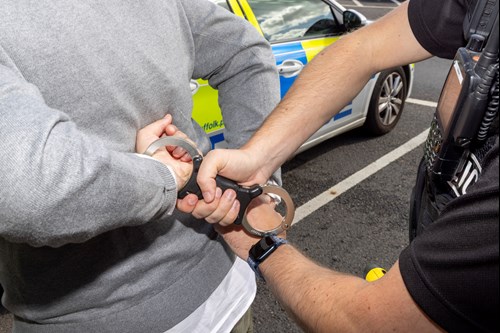
The investigation stemmed from an arrest shortly after midnight on New Year’s Day 2022, following a road traffic collision that caused only damage.
Rick attended after reports that a man had been seen running from the scene. He later located the man lying in a wooded bank, with what he describes as ‘a belt loosely around his neck’.
Having established that the man was conscious and breathing, but ‘clearly intoxicated’, Rick arrested him and took him into custody. He failed a breathalyser test, which meant he was subsequently charged before being released. Five days later, he was sadly struck by a train in London and died.
‘It then became a witch hunt’
In July 2023, Rick was served with gross misconduct proceedings relating to allegations around his handling of information during the custody process.
And he says the IOPC’s investigation quickly began to shape a version of events he strongly disputes.
“I was accused of deliberately and intentionally not mentioning in custody that I had found the man with a belt around his neck,” he said.
“I completely agree, something tragic and terrible had happened - a person died - an investigation needed to happen to ensure the handling of the incident was carried out correctly.
“But it felt like a narrative was being spun. It was like there had to be a conclusion, and I was placed into it.”
Removed from frontline policing
As the investigation progressed, Rick says he was heavily restricted from operational duties, preventing him from working on the frontline or evidential policing.
He continued: “I couldn’t go near crimes. I couldn’t do anything evidential. I was basically taken out of policing as I knew it.”
Instead, he was placed into non-operational work.
“I didn’t join the job for that. I joined to be a response officer,” said Rick, who ended up going off sick due to the impact the investigation was having on his mental health.
“I ended up on antidepressants. If you’d told me years ago that would happen, I would never have believed you. The investigation changed me.”
Three years of uncertainty
Rick has stressed that he is fully supportive of investigating officers when it’s required, but is calling on the IOPC to reduce the length of investigations.
“I am 100 per cent behind investigating officers. It is crucial to ensure that procedures were followed correctly, and for us all to learn lessons moving forward,” said Rick, who is highly critical of the investigation's length, which he says left him in prolonged uncertainty.
“But it’s the length of these investigations that needs to be urgently reviewed. You’re told these things should take months, but it drags on for years. You’re just stuck waiting.
“This has been my life for almost three years - I completely spiralled.”
Despite the ordeal, Rick says he never lost sight of the wider tragedy connected to the case.
“There is a family who lost someone, and that will always be central. But that doesn’t automatically mean I’m to blame,” he said.
Cleared after years
In September 2025, Richard was cleared of gross misconduct allegations, and in March this year, the inquest was finished.
He describes the outcome of the IOPC investigation as a relief, but says the experience has permanently changed his approach to policing.
He said: “Coming back felt like starting again. I had lost confidence. You start second-guessing everything.”
Rick also said that the emotional impact has not simply disappeared with the conclusion of the case: “It changes you. You don’t just go back to how you were before.”
At times, he says, he seriously considered leaving policing altogether.
“I looked for other jobs. I thought about walking away completely. But I’d worked too hard to get into the job.”
Support and moving forward
Richard says he was ultimately able to return to work thanks to strong local support and his family, particularly his wife, Alexia.
He also says the experience has given him a lasting concern about the impact of lengthy investigations on officers.
He ended: “I can see how people reach rock bottom. Three years of your life just gone into this process - it takes its toll.”
READ MORE: Response Police Week: officer discusses enjoyment and impact on the frontline.











© Copyright 2019 Police Federation All rights reserved