


‘An arrest is not the measure of a good police officer,’ says branch chair
15 September 2026
“Let's judge officers on whether they are protecting the public and tackling crime - not simply on how many pairs of handcuffs they have put on someone.”
Those are the words of Suffolk Police Federation chair Darren Harris, who has hit back at claims that a large proportion of police officers are failing to make arrests, saying the figures risk creating a completely misleading picture of modern policing.
His comments come after a national newspaper report claimed that 40 per cent of police officers in England and Wales made no arrests during 2025/26, based on Freedom of Information data from 16 forces.
The figures have prompted questions about whether policing has become too removed from traditional frontline enforcement.
Arrests
But Darren said the number of arrests personally recorded against an officer was a poor way of judging whether they were doing their job effectively.
“Of course arrests matter,” he said, adding: “When someone has committed a serious offence and there is a lawful basis to arrest them, the public rightly expects the police to act.
“But an arrest is an outcome of policing, not a job description.
“You cannot look at an officer’s collar number and count the number of arrests attached to it and somehow decide whether that person has had a productive year.
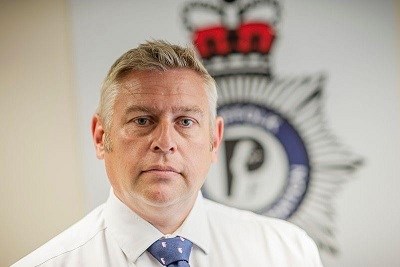
Branch chair Darren Harris
“Policing simply doesn’t work like that.”
Darren said officers could spend significant amounts of time dealing with victims, gathering evidence, protecting vulnerable people, preventing crime and managing complex investigations without making a single arrest themselves.
“Think about the officer who spends hours supporting a victim, taking statements, securing evidence or building intelligence around an offender,” he said.
“That work can be absolutely critical to a successful investigation, but it may never result in an arrest being recorded against that individual officer.
Suspect
“Likewise, one officer might identify a suspect, another might build the case, another might locate them and another might make the arrest.
“Which one of those officers deserves the credit? The answer is all of them, because policing is a team effort.”
Darren said the focus should instead be on whether police activity makes communities safer and improves outcomes for victims.
“Suffolk is a good example of why you have to look beyond one statistic,” he said.
“We have officers carrying out highly visible patrols, responding to calls, investigating offences, protecting vulnerable people and taking proactive action against those who cause the most harm.
“We’ve seen targeted operations delivering hundreds of arrests and thousands of hours of patrols, while crime in Suffolk remains among the lowest in the country.
Criminals
“That is what the public should be interested in - are we preventing harm, are we protecting victims and are we taking effective action against criminals?”
Suffolk has recently been ranked second in England and Wales for the lowest level of recorded crime, with the latest figures showing 56.1 recorded crimes per 1,000 people in the year to March 2026.
Darren said that did not mean Suffolk officers should become complacent, but demonstrated why policing performance needed to be considered in the round.
“Nobody in policing is saying that arrests don't matter, and nobody is suggesting officers shouldn't be proactive,” he said.
“But we need sensible measures of performance.
“An officer who prevents an offence, protects a child, helps a vulnerable victim, gathers intelligence that stops a serious crime or spends days building a complex case is doing policing.
Pressure
“They shouldn't be made to feel that their work somehow doesn't count because they didn't personally make an arrest.”
He also warned that simplistic headlines could damage already stretched officers.
“Police officers are working under enormous pressure,” Darren said.
“They are dealing with some of the most difficult situations imaginable, often with limited resources and increasing demand.
“The last thing they need is to see their professionalism and commitment reduced to a single number that doesn't tell the full story.
“If we genuinely want more effective policing, then let's have a serious conversation about resources, staffing, training and giving officers the time they need to do the job properly.”
READ MORE: 'It's all about being seen AND heard' says Fed rep.










© Copyright 2019 Police Federation All rights reserved