Federation leaders pledge to rebuild trust and deliver meaningful change
21 October 2026
Police Federation leaders acknowledged the need to rebuild trust, improve accountability, and drive meaningful cultural change during a frank discussion at this year's Annual Conference.
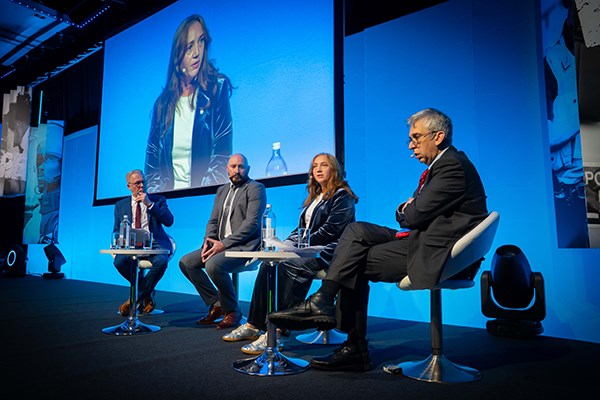
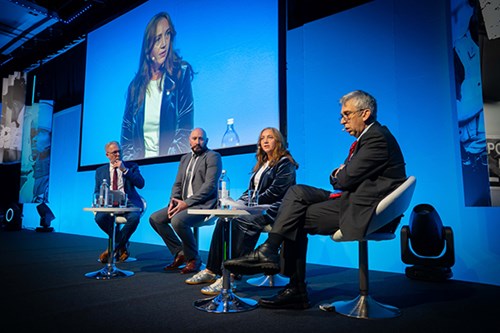
During a frank panel discussion about the future of the Federation, acting deputy national chair Paul Williams, acting National Secretary Mel Warnes and interim Chief Executive Officer Gabriel Milland faced questions about the future of the organisation, its credibility and plans to create a stronger, more united Federation.
The discussion, chaired by host Ian Collins, addressed the challenges facing the Federation following recent events involving its senior leadership, with delegates questioning how meaningful cultural change could be achieved and whether the organisation could restore its credibility with members and the Government.
Opening the discussion, Mel acknowledged that members had every right to feel disappointed and angry about what had happened.
Credit: Anderson Photography
“Members are absolutely right to be shocked and angry, feel let down, I'm sure,” she said, adding: “We've not got things right, and we need to do better. And we're honest about that.”
However, she stressed that the Federation remained an organisation worth fighting for.
“This is a Federation that's worth fighting for, and that's what this transformation programme is about, because we need to build that trust.”
Gabriel outlined the proposed structural changes, explaining that independent reviews informed the transformation programme and produced 49 recommendations.
Transparent and accountable
He said the changes were designed to create a more transparent and accountable organisation, with clearer leadership responsibilities and stronger oversight.
The proposals included replacing the separate national chair and secretary roles with a single general secretary position, reducing the size of the National Board and strengthening the responsibilities of the National Council.
Independent non-executive directors are also being introduced to provide additional scrutiny and challenge.
Gabriel said the changes were essential to ensuring the Federation could properly represent its members.
“We need to get ourselves into a situation where we can be the organisation that our members need us to be,” he said.
Reform and change
He emphasised that structural reform alone would not be enough, adding that the Federation also needed fundamental cultural change.
The importance of transparency, accountability and ensuring individuals felt able to challenge decisions was repeatedly highlighted throughout the discussion.
Paul delivered a candid assessment of the Federation's previous leadership culture, arguing that division and personal agendas had prevented the organisation from working effectively.
He said the Federation needed to acknowledge its past failures before it could move forward.
He stressed that the Federation's representatives and branches were central to supporting members and that national leaders needed to work together rather than operate in isolation.
Relationships
Mel agreed, pointing out that the disconnect extended beyond headquarters to relationships between the National Board, National Council and local branches.
“One Federation is stronger, and that will only benefit the members,” she said.
Paul argued that genuine cultural change required people to reflect on their own actions, acknowledge mistakes and take responsibility for improving the organisation for those who followed.
Mel reiterated that rebuilding trust would be one of the Federation's biggest challenges, while Gabriel agreed that culture was fundamental to the transformation programme.
“I think everything flows from culture. And culture is the most important thing,” said Gabriel.
United Federation
Despite the difficult questions, the panel pointed to the National Council meeting on 22 September as evidence that a more united Federation was beginning to emerge.
Gabriel described how representatives had debated the transformation proposals individually before unanimously supporting the final package.
He said the process marked a significant shift from previous reforms, with representatives able to challenge proposals, express concerns, and contribute to decisions.
Paul described the meeting as one of the most unified and respectful he had experienced during his time with the Federation.
He said the willingness of representatives to engage in constructive debate, even when they disagreed, demonstrated the type of organisation the Federation needed to become.
Shaping Federation priorities
He stressed that the new structure would give branches greater influence through the National Council, helping ensure the concerns of officers on the ground shaped the Federation's priorities.
Mel explained that acting appointments had been necessary to maintain continuity and ensure the Federation could continue supporting members while dealing with the challenges facing its leadership.
Throughout the discussion, the panel repeatedly returned to the importance of ensuring that transformation delivered tangible improvements for members.
Gabriel said the organisation was adopting a renewed focus on putting members first, with staff encouraged to consider how their work directly benefited officers and Federation representatives.
Culture and operations
Looking ahead to the next 12 months, Paul said he expected delegates to see a significant change in the National Board's culture and operations.
He said the aim was to create ‘a more approachable, more open, more transparent, more effective Federation’, with a stronger and more meaningful voice.
This year’s Annual Conference continues today (Wednesday 21 October) and tomorrow (Thursday 22 October).
READ MORE: Aberfan victims remembered as PFEW conference opens on 60th anniversary.
Hot topics
Quick links to information