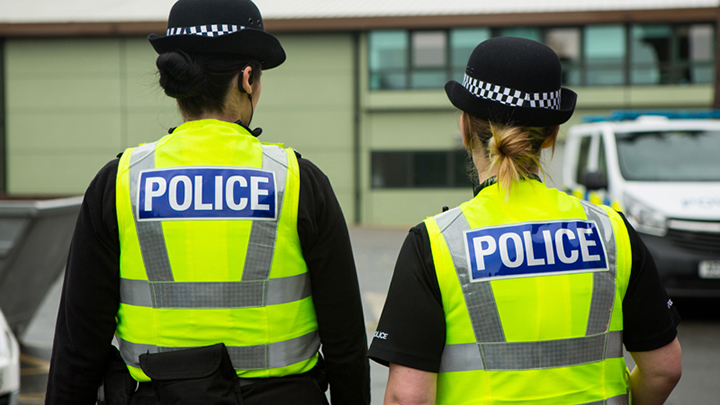
World Suicide Prevention Day: Check in with each other
10 September 2025
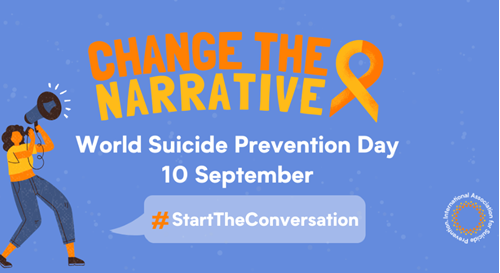
This year’s theme is ‘changing the narrative on suicide’, which calls on people to challenge harmful myths, reduce stigma, and foster open and compassionate conversations.
Members are being encouraged to ask how their colleagues are, and to be mindful of their own mental wellbeing.
Branch chair Delme Rees said: “Policing is an incredibly demanding profession. We are regularly called to serious and traumatic incidents, and we often hold those experiences close.
“Sometimes it can become too much, and just because we’re usually helping others it doesn’t mean we can’t ask for help ourselves.
“We want to encourage members to talk about their mental health.
“And as work colleagues, we spend a lot of time with each other and are often the best people to know if someone is struggling.”
The Police Federation of England and Wales (PFEW), meanwhile, is lobbying for the recording of suicides and attempted suicides to be made mandatory by law.
Suicide
In a Channel 4 News feature this week, it was tragically revealed that at least 100 police officers and staff have taken their own lives in three years.
Some 46 serving police officers and a further 20 police staff died by suicide between January 2022 and May 2025, a Freedom of Information request submitted by Channel 4 News to the National Police Chiefs’ Council revealed.
An estimated 26 former police officers and eight ex-police staff are also known to have taken their own lives during that period - bringing the total to at least 100 deaths across the three-year period.
PFEW is devising a clause to be included in the Crime and Policing Bill currently in the House of Lords.
Additionally, it is pressing for a change in legislation so police officer deaths by suicide and attempted deaths by suicide are included in the Reporting of Injuries, Diseases and Dangerous Occurrences Regulations 2013 (RIDDOR). It would be a vital step towards acknowledging and addressing this devastating issue that affects so many lives.
Wellbeing
Suicides are currently not reportable because they are not classified as an accident. Death by suicide is not seen as something the employer could have prevented. However, the lack of reporting and investigation means that patterns aren’t noticed.
Inconsistent data collection methods also mean these figures are inaccurate and are likely to be much higher.
Wellbeing standards across the 43 forces are also a postcode lottery for police officers currently, and a set of minimum standards must be made mandatory, rather than guidance, PFEW said.
This includes better training for line managers and compulsory psychological risk assessments for frontline roles.
PFEW Wellbeing Lead Paul Williams said: “Behind each mental health condition is an officer enduring immense trauma. It affects not just them, but their families, relationships and careers – and it can be devastating.
Mental health
“Over a career, a police officer may experience 400 to 600 traumatic incidents, compared with just a handful for most civilians. Policing now has the highest rates of mental health-related sickness absence of any profession. This shows how trauma accumulates over months and years if left unaddressed.
“We are facing a legacy of poor mental health because problems are not tackled early, and there is no consistent infrastructure in policing to prevent harm. Prevention is always better than a cure.
“The NHS is under huge strain, so access to counselling is very limited. Officers are leaving the service because of unaddressed mental health issues. As part of our ‘Copped Enough’ campaign, we are not only pressing for fair pay but also for stronger mental health support to be made available across all forces.
“It is the responsibility of all chief constables to ensure welfare provisions are met.”
If you need help, please reach out - whether that’s today, tomorrow, or whenever you need it. Your wellbeing matters.
Support services available:
-
Mental Health Crisis Line (24/7) designed for police officers and staff: 0300 131 2789
-
Samaritans (24/7): 116 123
-
National Suicide Prevention Helpline UK (available 6pm to midnight every day): 0800 689 5652
-
Mind’s Blue Light Infoline: 0300 303 5999
Hot topics
Quick links to information