


Understanding reasonable adjustments
10 November 2026
Under the Equality Act 2010, employers must make reasonable adjustments for employees with disabilities. Failure to do so may be discrimination.
However, the employer does not have to change the basic nature of the job.
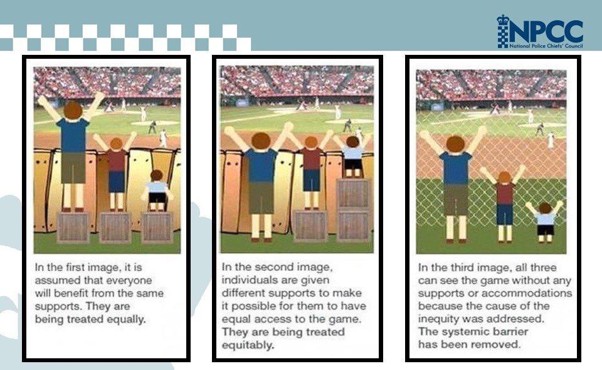
Reasonable adjustments involve individuals being given certain supports or the removal of a systemic barrier itself. This could lead to a modification being made to the way in which a role is undertaken or equipment being provided to ensure people with disabilities can work on an equal basis. The goal is not to give advantage but to allow equitable access and participation by removing or reducing any disadvantage. It is all dependant on individual needs and there is no definitive list of where reasonable adjustments should be made, or what they should be.
Considerations for the employer
There are a number of factors to be considered:
- The employer size and resources
- The cost of an adjustment
- The practicality of an adjustment
- Whether that adjustment would fundamentally change the nature of the job, and
- Whether the adjustment would remove or reduce the barrier or disadvantage?
Who pays?
Employers are legally responsible to pay for reasonable adjustments, however, the cost may influence what is deemed reasonable. The Government’s Access to Work scheme can provide grants for certain support. In some cases, the scheme may provide a certain amount, and the employer may make up the deficit.
Examples
Reasonable adjustments include:
- Providing certain software such as Claro read
- Providing equipment such as rise and fall desks, orthopaedic chairs or noise cancelling earphones
- Changes to the workplace itself such as lighting
- Providing more time to do written or reading tests for interviews
- Changing working arrangements
- Distributing work differently within a team.
Reasonable adjustment passports
There are two reasonable adjustments passports (RAP) within West Midlands Police.
The member needs to complete the closed form first, detailing the need for the adjustments and the adjustments they are requesting.
Once this has been completed, they send it to their supervisors and then a conversation takes place. When an agreement has been reached as to the adjustments that will be implemented this is all documented on the form which is then uploaded to the member’s personnel file.
When they have been agreed, the open form can be completed. This just records the agreed adjustments, with no need for any personal medical details to be included.
It is this second form that can be shared with any new supervisors if necessary, perhaps when the individual changes teams or if a new supervisor comes into post.
This second form eliminates the need for anyone to have to share personal details repeatedly unless, of course, they wish to.
This is a positive step and should be used for any new applications, or when it is time for an annual review of adjustments.
RAP panel
If adjustments cannot be agreed locally or require more consideration, requests can be heard by the RAP panel. The panel meets monthly and involves members of the diversity and inclusion team and HR. They can approve or refuse certain adjustments as well as being able to authorise funding for implementation.
Practical advice
Communication is key. Although you do not legally have to disclose your medical situation unless there is a risk to you or another, if the employer isn’t aware then it cannot be accused of failing you. In practical terms, you should be open at least about the very basics of your needs so that realistic and fair consideration can be made as to what adjustments are reasonable.
Be sensible, be realistic and be reasonable. Work with the Force and not against it. Ultimately, the aim is to find a solution to allow you to work in a comfortable, supportive and productive role.
Sources of support
There is a range of support available to you should you feel you need reasonable adjustments in the workplace.
Consider contacting:
- Your GP or consultants for advice
- The occupational health team
- HR
- The Force EnABLE Network
- Access to Work
- The National Autistic Society.
You can also contact a workplace Federation rep – check the list on the Find a rep page of our website, where you will be able to find our equalities and personnel trained reps, or you can also contact me at Guardians House - contact details can be found on the Meet the team page.