

Police minister formally starts officer pay review
20 February 2026
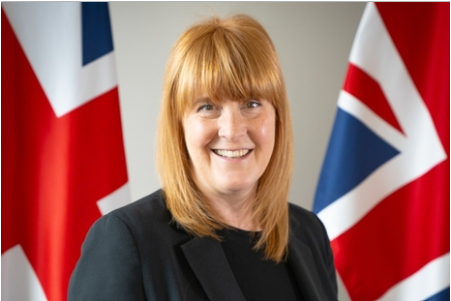
Policing minister Sarah Jones.
The formal process for determining officers’ 2026 pay award has now started.
Police minister Sarah Jones yesterday asked the Police Remuneration Review Body (PRRB) to make its recommendations for police pay for 2026/2027.
In a letter to the review body’s chair, Zoe Billingham, Ms Jones has also asked PRRB to consider proposals put forward in Year 2 of the National Police Chiefs’ Council’s review of allowances.
“We accepted your recommendation for the 2025/26 pay award. However, since it came in well above the figures we set out as affordable within our evidence, we again had to take difficult decisions and make savings elsewhere in the Home Office’s budgets to provide additional funding to forces to help with the increased costs,” the police minister wrote.
“We undertook a rigorous in-year savings exercise and put in place enhanced spending controls, finding efficiencies across various programmes and reducing discretionary spend. As the Spending Review confirmed, all pay must be funded from departmental budgets and there will be no additional funding available for pay settlements.”
She also highlighted the ‘recruitment and retention’ context and the Police Reform White Paper.
Copped Enough
Jess Davies, chair of West Midlands Police Federation, said it was important for the Government to ensure that officers once again receive a satisfactory pay award, not just for the benefit of individual officers but also for the police service as a whole.
“The Police Federation has repeatedly flagged up through its ongoing Copped Enough campaign that police officers are 21 per cent worse off now than they were in 2010 and that is having an impact on officer retention and recruitment,” she explains.
“Our research has found that a third of officers are struggling to afford food, rent or heating and that has to be addressed.
“Police officers put their lives on the line each and every day as they serve and protect their communities, they deserve to be fairly recompensed for the unique role they play in society.
“Instead they are often struggling to make ends meet while also facing increased violence as they go about their duties, while many are also coping with mental health difficulties too.”
The Copped Enough campaign calls for:
- Fair pay: urgent action on pay to recognise the unique demands of policing
- Support for frontline risks: including an army-style P-Factor allowance recognising the dangers officers face
- Retention not just recruitment: a real plan to keep experienced officers on the beat
- Better protection and mental health support: so, officers are not forced to suffer in silence.
Evidence
During the pay review process, PRRB will receive evidence from the Home Office, HM treasury and key stakeholders – including the NPCC.
The Police Federation of England and Wales withdrew from the pay review process in 2021, saying the pay review mechanism was ‘not fit for purpose’ and questioning its independence. It did, however, provide some information for last year’s PRRB process while not formally returning to the process.
The police pay year starts on 1 September with recommendations from PRRB usually being published in the summer before being considered by the Government.
Last year PRRB’s recommendations included:
- A consolidated increase of 4.2 per cent to all police officer pay points for all ranks up to and including chief superintendent
- On-call allowance be increased from £25 to £35
- Away from home overnight allowance be increased from £50 to £60, and
- Hardship allowance be increased from £30 to £40.
The Government accepted PRRB’s recommendations.