

Perry Barr MP raises officer numbers and funding issues in Parliament
22 June 2026
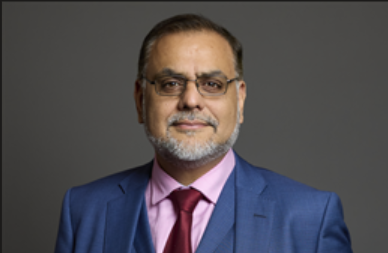
Ayoub Khan MP.
The significant decline in officer numbers and the way in which the Force misses out in the police funding formula have been raised in Parliament by Perry Barr MP Ayoub Khan.
The independent MP pointed out that the Force has 520 fewer officers on duty as well as 520 fewer police community support officers when compared with 2010 when police funding cuts came into effect.
Debate
“To make matters worse, when we adjust for population growth, as we must, our area actually needs 640 additional officers compared with 2010. In real terms, then, we are not just 520 police officers and 520 police community support officers down; we are down by about 1,700 officers,” said Mr Khan who had secured a debate in Westminster Hall last Tuesday asking whether the Government had considered its support for West Midlands Police.
Moving onto the funding received by the Force, he added: “For far too long, the West Midlands Police has been set up for failure by the Government’s funding allocation, which leaves the Force around £43 million short every year. That shortfall risks a further loss of another 80 police officers, with the situation becoming so dire that the residents of Birmingham are being asked for an additional contribution through their council tax.
“They have already seen their council tax increase by 24 per cent over the last three years, and now they are being invited to make good the shortfall by paying more, which simply is not acceptable.”
He was critical of the Government’s police reform white paper which he said had been a missed opportunity to reform police funding which he argued was the ‘single biggest obstacle to tackling crime in our area’. Instead, the MP said it had been put on the back burner, with reports that change would not start until 2034.
“Police funding needs to be fixed, and it needs to be fixed now,” Mr Khan told MPs.
Priority
Jess Davies, chair of West Midlands Police Federation, welcomed Mr Khan’s comments.
“We have long argued that the Government’s key priority should always be the safety and security of the public. An effective, properly resourced police force is key to this. We need to see a longer-term strategy for sustained investment in policing so that we can provide the police service our communities want and deserve,” says Jess.
“We share Mr Khan’s frustration that the police funding formula is not being reformed as a matter of urgency.”
Mr Khan found support from other MPs during the debate including Paulette Hamilton (Labour, Erdington).
In responding to his comments, Sarah Jones, the policing minister, said the Government was committed to improving local policing and pointed out that West Midlands Policing this year has funding of £883 million in funding, an increase of £36.9 million on the previous year.
Decline
The minister acknowledged the decline in officer numbers and said the Government could not transform these overnight.
“Since last year there are, I think, 309 more full-time officers in West Midlands neighbourhoods than there were before. There has been a small overall increase in the number of police officers but a bigger increase in the number of officers who are in our communities, where we believe they should be,” she explained.
“Through the funding formula and direct money from Government, we are trying to incentivise more neighbourhood police. That is what our populations want, so that is where we are putting our resources. The 3,000 additional police officers and police and community support officers in our communities will begin to make a difference, but I am not for one minute suggesting that is enough.
“Our ambition is to have 13,000 extra police in our neighbourhoods by the end of this Parliament.”
She went on to acknowledge the ‘particular challenges’ faced in the West Midlands and highlighted funding for programmes tackling serious violence and knife crime.
Ms Jones concluded: “We have by some measure put extra money into funding the West Midlands Police this year. Over and above that, we are using the resources we have to target the serious crime that we know is a problem in the West Midlands, as in other parts of the country. I am focused on outcomes, rather than on the number of officers - although we are bringing a lot more officers into the neighbourhoods - and there are some quite good crime outcomes in the West Midlands, not least the reduction in knife crime.”