


Officers concealing flexible working during promotion processes, report reveals
22 June 2026
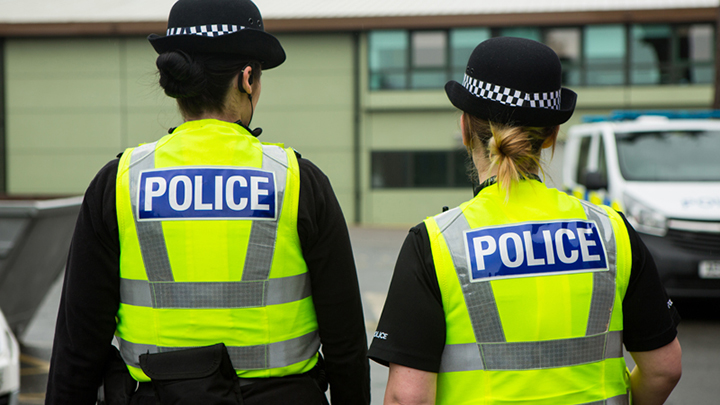
Female officers with flexible working arrangements are actively concealing them during Force promotion processes because they fear it could go against them, a new study has found.
Sergeant Deborah (Deb) Walker conducted research on the barriers to women gaining promotion as part of a post-graduate master’s degree in management and leadership at Coventry University.
She has now published her findings and put forward nine recommendations to the Force in response to the results of the study, some of which involve immediate procedural reform while others relate to longer-term cultural change.
Evidence
Deb says: “Women in West Midlands Police consistently outperform male colleagues at every formal promotion stage, yet remain significantly underrepresented in senior leadership. This report presents evidence from original primary research conducted within the Force, a mixed methods study combining a survey of 66 officers at sergeant rank and above with five semi-structured interviews and 51 open-ended qualitative responses from serving officers.
“The research identifies barriers to progression as structural and institutional, not individual. The most significant and novel finding, unforeseen by any existing theoretical framework, is that officers with flexible working arrangements are actively concealing them during promotion processes due to perceived institutional risk. This means WMP may be systematically misreading its own promotion data.”
She continues: “WMP's current promotion documentation requires applicants to acknowledge that existing flexible working arrangements may not be continued upon promotion to a new posting. This creates a condition of unbounded risk for officers with fixed caring arrangements, deterring applications before formal assessment takes place.
“If concealment is occurring at scale, WMP is not measuring the incompatibility of flexible working with senior leadership, it is measuring the perceived institutional cost of disclosing it.”
Deb believes the research shows that barriers to female promotion within the Force are structured, institutional and embedded in organisational policy, culture and working practices.
Capability
She says women within the Force do no not lack confidence, ambition or leadership capability but they lack an organisational environment in which the pursuit of senior leadership is compatible with the other responsibilities they carry.
“This matters for WMP operationally. Research consistently demonstrates that gender-diverse leadership produces better organisational outcomes, improved decision-making, and stronger community engagement,” Deb explains.
The survey involved officers of sergeant rank and above and, in addition to contributing to the master’s degree course, aimed to help the Force and the Federation better understand the experiences of officers, the lessons that can be learned and how women can be better supported in developing their careers.
“The survey makes interesting reading,” says Jess Davies, who is a sergeant and became the first female chair of West Midlands Police Federation in May last year, “If the Force is committed to equality across the board then the findings and recommendations need to be seriously considered.”