

Fed member discusses neurodiversity among officers for World Autism Awareness Day
2 April 2026
When arguing that policing should not just merely include neurodivergent officers - but actively draw upon their strengths - branch member Adam Norris can point towards his own career as clear evidence of the advantages.
And to help the Federation mark World Autism Awareness Day on Thursday 2 April, this is exactly what he has done, discussing his experiences to help spread a message of acceptance and empowerment among his colleagues in Durham Constabulary.
In a life lived with Attention Deficit Hyperactivity Disorder (ADHD) and Autism Spectrum Disorder (ASD), Adam says his decision to join the Force at the age of 22 felt momentous – but it came long before he fully understood what neurodivergence actually was.
Instead, he simply knew something was different about the way his mind worked, without being able to put a definitive finger on what it might be.
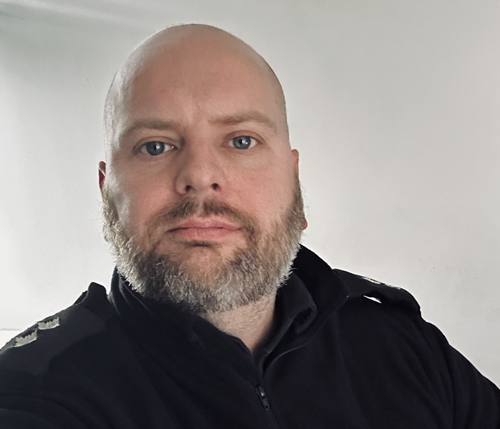
Branch member Adam Norris
“I always felt different growing up, like I was a bit of an outsider. That continued into much of my adult life, for years to come after I first became a PCSO and later a PC,” Adam said.
“I had an understanding of my traits and tendencies, such as hyperfocus, pattern recognition and sensitivity to justice – a big factor in why I wanted to go into policing in the first place – but beyond that, I didn’t know what I was living with.”
While this perspective on himself has changed in recent times, Adam revealed that for a portion of his policing service, he has been faced with difficult moments stemming from misunderstandings, the frustrations of others and even discrimination.
Equally, though, he hasn’t let this adversity stop him from achieving in the police and becoming a champion for diversity and equality in the process.
Response
Across periods spent in response, custody, offender management and the control room, he has remained geared towards efficiency, which has been behind some of his proudest accomplishments in the Force.
“That’s another key trait of mine which has always been there,” added the inspector, who currently works across both a response investigation team and a prisoner handling team.
“I’ve always been known as a proactive officer, trying to find ways to make our output quicker and more effective. Back when I was a sergeant involved in a shoplifting project, I had the idea of asking the tech company we were working with to develop a remote statement taker, meaning officers could get a statement with a digital signature from anywhere in the world.
“As a force, it’s quite possible we were the first force in the country to use this technology, and we’ve used it to get statements from victims and witnesses from as far away as Australia and Singapore.
“Under my leadership as a response inspector, my team was recognised for our work disrupting organised crime groups. In that one, I think I was helped and motivated by my intolerance for unfairness and deep need to seek justice.”
Thanks to strong levels of empathy, Adam has ensured the impact of his innovative policing style does not end with his colleagues.
Custody suite
The 42-year-old has also been responsible for the creation of a still-active scrutiny panel within Durham Constabulary’s custody suite, which aims to ensure proportionate uses of force are applied across detainees of all social groups.
Recently, he has zoomed into the care of neurodivergent detainees by acting as a tactical advisor to a working group focused on the treatment of such individuals during their time in custody – mainly by ensuring officers are upskilled with the cultural competence to recognise where this may be necessary.
“Having an awareness is what it all comes down to, really. I didn’t completely have that myself until my own diagnosis in 2024, which validated me as a person and made everything make sense, going back to when I was a child.
“Even before that, however, I was at least considerate of it, which wasn’t always been afforded to me in return at work. It is said that neurodivergent people will average roughly 20,000 more negative interactions than neurotypical people before they even reach adulthood, and in my experience, that certainly wasn’t the end point.
“We can be sensitive to rejection and appear rude when we may just be hyperfocused.”
Additionally, Adam says he has, on occasion, been put under limits, doubted and questioned over his suitability for a role or task.
Unique strengths
And if this is happening to other officers in his position, he says this is what pains him the most, because it means his profession misses out on the full talents of its workforce.
“Reasonable adjustments should be advocated, but I think the ultimate aim should be to improve workplace environments so fewer reasonable adjustments need to exist – and this doesn’t just go for policing.
“For me, part of that is not just accommodating us, but taking advantage of our unique strengths and capabilities.
“Despite my struggles, I’ve still been lucky enough to have had those opportunities at times, but it’s not the same for everyone.
“If you feel like this is you in the Force, you should just be yourself and not ‘mask’ to appease others – the more people who are openly neurodivergent in the police, the more we can normalise what is essentially a natural variation in how the mind works and remove the stigma.”
READ MORE: Branch chair gives reaction to Sky News Police/Public Survey.
Hot topics
Quick links to information on the national Police Federation website: