

‘Don’t bury it’: Branch secretary speaks out for Mental Health Awareness Week
11 May 2026
“I stood next to the train tracks and was ready to end it all, but a voice in my head stopped me. I soon went to the GP - a total stranger - and ended up breaking down in tears. And once I started, I couldn’t stop. Everyone around me could see I was ill, I was the last one to realise.”
In this candid interview, the secretary of Durham Police Federation Phil Stephenson, has bravely spoken honestly about his mental health challenges.
The 43-year-old is telling his story to encourage members to speak out, reach out and to not bury how they are feeling this Mental Health Awareness Week (11-17 May).
“Prevention is better than cure,” said Phil, adding: “There’s a responsibility on all officers, all ranks, to look after one another - but also on you as an individual to reach out and accept help.”
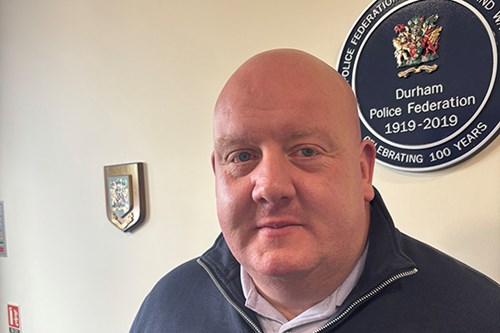
Phil joined the Force more than 24 years ago. He was 19 years young, and recalled feeling like he had stepped into an ‘adult world’ long before he was truly prepared for it.
“The people around me seemed old and wise,” he said. “Of course, they weren’t that old, I was just young - and I had to grow up quickly.”
Very quickly, Phil, like so many of his colleagues, was exposed to traumatic events - deaths, drugs, violence and situations that no amount of training can fully prepare someone for.
“You think you’re ready for it, but you’re not,” Phil explained. “And over time, that built up and built up.”
Warning signs
Looking back, Phil can now recognise the warning signs that had been building for years.
“I was the last person to notice,” he said. “And I wasn’t the nicest person to be around.”
He describes losing his temper, withdrawing from people, and experiencing extreme highs and lows. Some days, he didn’t want to do anything at all. At the time, however, he struggled to understand what was happening to him.
Back in 2016, things reached a turning point. Phil was due to get married later that year, but internally, he was struggling more than ever.
One day, while at his local train station, collecting tickets ahead of his honeymoon, he found himself thinking about jumping in front of a train.
Walk away
“What made me walk away from the train station, I don’t know,” he said, honestly. “But that might not have been the case.”
A voice in his head told him not to do it. Instead, he went to his parents and told them how he was feeling.
“I feel guilty about that now - that was a lot for them to hear. They were upset, but not surprised. It was almost a relief for them that the penny had dropped,” said Phil, who soon afterwards went to see his GP.
“I was crying my eyes out in front of a complete stranger - and once I started, I couldn’t stop. But it felt like a massive relief to get it off my chest.”
That moment marked the beginning of his recovery. Through support from his GP, counselling services and trauma therapy, Phil slowly began learning how to cope. The Force referred him to counselling through CIC, where he received more in-depth trauma therapy.
Loved ones
He also credits the support of his loved ones, particularly his wife, who he went on to marry and remains happily married to today.
“She has the patience of a saint,” added Phil, who said that it shouldn’t be forgotten just how much of an impact a person’s mental health can have on their loved ones.
He believes support services for families are hugely important and praises the counselling support available through group insurance and force welfare services for both officers and their immediate families.
“They are often forgotten about,” he said. “Not just the individual, but the people who have sat on the receiving end of the shouting or the silence.”
Mental health
Phil is clear about the impact policing had on his mental health: “Everyone has life pressures outside of work, but no amount of training can prepare you for the sights, smells and sounds we experience and are exposed to as police officers.”
Phil admits that his story may come as a surprise to many people.
“I think people see me as a steady person,” he said. “I was the rugby player, the first one in a scrap, the one who confronted everyone - except my own mental health.”
And that, he said, is exactly why it is important to speak openly.
Now working in a role that allows him to better support and understand others, Phil says his experiences have ultimately helped him connect with colleagues in a more meaningful way.
Support systems
“You can look people in the eye and say you know how they feel,” said Phil, who is now a trained Mental Health First Aider.
He strongly encourages officers and staff to make use of support systems such as TRiM, counselling services, welfare departments and peer support networks.
“TRiM is a fantastic tool,” he said. “I’ll only ever encourage people to make use of these resources.”
Above all, Phil wants people to understand that opening up can change - and even save - lives.
Speak out
His message for colleagues and members is simple but powerful: “Speak out. Speak to your colleagues, your GP, the welfare department - let someone know you’re struggling.
“Contact the Federation, whoever it is, just reach out. Don’t bury it, don’t sit on it alone, because it won’t get better.”
Support available to members includes:
- Samaritans: 116 123
- Oscar Kilo Mental Health Crisis Line (24/7): 0300 131 2789
READ MORE: Fundraising team ready for Three Peaks Challenge.
Hot topics
Quick links to information on the national Police Federation website: