


Branch chair gives reaction to Sky News police-public survey
2 April 2026
New research revealing negative public attitudes towards policing is in keeping with a workforce of officers who feel overstretched and undervalued, says branch chair Louise Guest.
UK Tonight: Is Policing Fit for Purpose? was broadcast on Sky News on 19 March, presenting data from a series of questions primarily put to members of the public about their outlook on the police.
Headline findings included over a third (35 per cent) of respondents saying they do not report crimes to the police, which links to the fact that just 14 per cent believed low-level, everyday crime was properly investigated by their force - compared to 53 per cent for the same question about more serious offences.
And among those reporting crimes, only half of respondents said they are happy with how cases are handled, with 64 per cent feeling dissatisfied with overall outcomes.
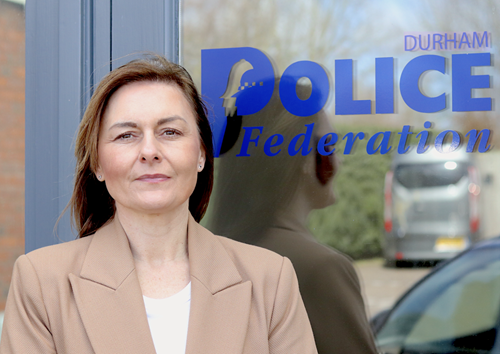
Branch chair Louise Guest
Commenting on the programme, Louise said: “While findings like these should be taken very seriously, they don’t come as a surprise because they reflect exactly what our members are telling us about the pressures they are under every day.
“Low levels of public confidence in the police are sadly nothing new, but neither is the fact that officers are consistently and unfairly pushed beyond their means at work. If their capacity to respond is far outweighed by demand, then of course they can’t deliver a service the public deserves.
“But it’s certainly not because they don’t care, and I’m sure I speak for our members when I say that more than a third of people choosing not to report incidents at all is painful to hear. Our members want to be trusted and relied upon by everyone, but they are currently working within a system which makes that impossible - one that is simply not working and needs clear reform.”
Trust
While 64 per cent of respondents said they have faith in ordinary police officers, a lesser figure of 48 per cent reported the same feelings of trust in senior leadership.
Officers themselves were also surveyed, with 82 per cent believing their job to be misunderstood by the public, making only 29 per cent feel appreciated by the communities they serve.
A strong 84 per cent of officers, however, maintained that they were proud of their job.
“As I’ve said, these issues will never be because officers don’t care about what they do,” Louise continued. “In the face of so many challenges and pressures, they are still here, committed to serving the public in the best way they can – even if they might not get much gratitude for it.
“Our members should know that as a Federation, we will always appreciate them and see the incredible commitment they give to the profession day in, day out, no matter what.”
Elsewhere in survey results, an overwhelming majority (93 per cent) of respondents identified underfunding as the single biggest challenge for policing today.
Funding
Louise was firmly in agreement with this, adding: “You can’t explore the root causes for any breakdown in the relationship between the police and the public without looking at funding.
“Financial restrictions have caused crises in recruitment, retention, pay and conditions, and more – which in turn demands more of the officers who are still around while giving them less.
“The end result, from the public’s perspective, is an inadequate service that doesn’t have the capacity for them – that much is clear from the fact 90 per cent of respondents believed their force to be understaffed.”
During the broadcast on Sky News, presenter Sarah-Jane Mee spoke to the Policing Minister Sarah Jones, who shared plans to increase neighbourhood policing, reduce bureaucracy, and introduce clearer accountability measures, such as named local officers and improved response-time monitoring.
Giving her reaction to this segment of the programme, Louise said: “These plans might sound encouraging, but if we are serious about improving outcomes and rebuilding public trust, then any plans must be supported by proper investment and a clear understanding of the pressures officers are facing on the ground.
Neighbourhood policing
“You cannot rebuild neighbourhood policing on good intentions alone - it requires purposeful, sustained investment.”
Wider problems across the criminal justice system were also debated on the programme, including court delays, prison overcrowding, and the severity of consequences for offenders.
Louise added: “If the system is under strain across the board, it only adds to the challenges officers are already dealing with, because they are expected to meet demand while navigating issues that are often beyond their control.
“I know full well how dedicated and resilient our members are, but there’s only so much they can be expected to do in the profession.
“It can not be down to them to repair the public mood towards policing – the Government must take responsibility for that, and it all starts with meaningful action.”
READ MORE: 'We have never been so happy to hear a baby cry' - officers save two-year-old's life in dramatic rescue.
Hot topics
Quick links to information on the national Police Federation website: